What to Write in a Journal When Nothing Happened
You sit down to write in your journal, think back on your day, and realize you have absolutely nothing to write about.
You woke up, went to work or school, ate your meals, and went about your usual routine. Nothing particularly exciting happened. No memorable conversations, no big accomplishments, no unexpected surprises.
So, what are you supposed to write?
The answer is simpler than you might think: you don't have to write anything extraordinary. In fact, you don't have to write much at all.
Journaling isn't about making every day sound interesting. It's about keeping a record of your life, including the ordinary parts. And sometimes, those ordinary days become more meaningful when you look at them together.
1. What Can You Write When Nothing Happened?
Even on the most uneventful days, there are small things you can reflect on. You don't need an exciting story or a profound realization to make a journal entry worthwhile.
If you're unsure where to start, try thinking about:
- How you felt: Were you relaxed, tired, content, stressed, or somewhere in between?
- Something small you enjoyed: A good meal, a favorite song, or a quiet moment to yourself.
- What was on your mind: Maybe you were looking forward to the weekend or thinking about something that happened earlier.
- Your routine: What did a typical day look like for you?
- One thing that stood out: Even something as simple as unusually nice weather or a conversation with a friend.
And if none of those questions inspire you, that's perfectly fine.
A journal entry can be as simple as:
Nothing particularly interesting happened today. I went to work, came home, and watched a show. It was a pretty relaxing day, which I appreciated after a busy week.
Or even:
Just another ordinary Tuesday. Nothing special, but I felt pretty good today.
Both are perfectly valid journal entries.
You don't need to turn every day into a story worth telling.
2. You Don't Have to Write Every Day
One of the easiest ways to make journaling feel like a chore is to treat it as an obligation.
When you first start journaling, it's tempting to set a goal of writing something every single day. But eventually, you'll encounter days when you have nothing to say.
You might stare at an empty page, trying to come up with something interesting just to maintain your streak.
And that's when journaling can start to feel more like homework than a personal activity.
The purpose of keeping a journal isn't to fill pages. It's to preserve the things that matter to you.
Some days, you might have so much to say that you write several paragraphs. Other days, a single sentence is enough. And sometimes, you might not feel like writing anything at all.
That's okay.
You can still maintain a sense of consistency without forcing yourself to write. A quick note about how you felt, a simple rating of your day, or even leaving the day blank can all be reasonable choices.
Your journal should adapt to your life, not the other way around.
3. The Bigger Picture: Why Ordinary Days Matter More Than You Think
Think about the moments you tend to revisit when looking through old photos or journal entries.
They're probably birthdays, vacations, celebrations, important milestones, or days when something unusual happened.
Those are the memories that naturally stand out. They're the days you want to remember, the stories you want to tell, and the experiences you might write several paragraphs about.
But here's the thing: those memorable days represent only a small fraction of your life.
Most of our lives are made up of ordinary mornings, familiar routines, quiet evenings, and countless days that seem to blend together.
And while those days might not seem particularly interesting individually, they can tell a completely different story when viewed together.
A single day tells you what happened. Many days tell you how life was going.
Imagine looking back at your journal from six months ago.
You might find a detailed entry about a wonderful weekend trip. Reading it brings back memories of the places you visited, the people you spent time with, and the things you experienced.
That's valuable. It's one of the reasons people keep journals in the first place.
But what about the weeks leading up to that trip? Or the month afterward?
If you only recorded memorable events, those periods might be almost entirely blank.
Now imagine you had also kept small records of your ordinary days.
Maybe you didn't write paragraphs. Maybe you simply noted how you felt, gave each day a rating, or recorded a few words about your routine.
Looking back, you might notice that the weeks before your trip were unusually stressful. Perhaps the following month was much calmer. Or maybe you were consistently having good days without anything particularly exciting happening.
None of those individual entries would necessarily be worth revisiting on their own.
But together, they reveal something that a collection of memorable moments alone might miss: what your everyday life actually felt like.
The patterns are often more meaningful than the individual entries
Consider two hypothetical months.
In the first month, you had one incredible day but spent most of the remaining weeks feeling exhausted and overwhelmed.
In the second month, nothing particularly exciting happened. You followed your usual routine, spent time with people you cared about, and felt generally content.
If you only journaled about noteworthy events, the first month might appear much more memorable.
But if you looked at the bigger picture, the second month might have been a much happier period overall.
This is one of the interesting things about keeping a daily record.
It gives ordinary days a place alongside extraordinary ones, rather than allowing only the most memorable experiences to define how you remember a period of your life.
And over longer periods, those records can become even more interesting.
You might notice that your mood tended to improve during certain seasons, that particular routines coincided with better days, or that a difficult period gradually became easier.
Of course, a mood rating or short journal entry can't capture every detail of your life, and patterns don't necessarily explain why something happened.
But they can give you a starting point for reflection.
You don't need to remember every day for every day to matter
There's another important distinction: recording a day doesn't mean you have to revisit it individually.
You probably won't open your journal five years from now to reread what you ate for lunch on a random Wednesday.
And that's fine.
The value of recording that Wednesday might not be in the entry itself. It might be in the fact that it contributes to a larger record of your life.
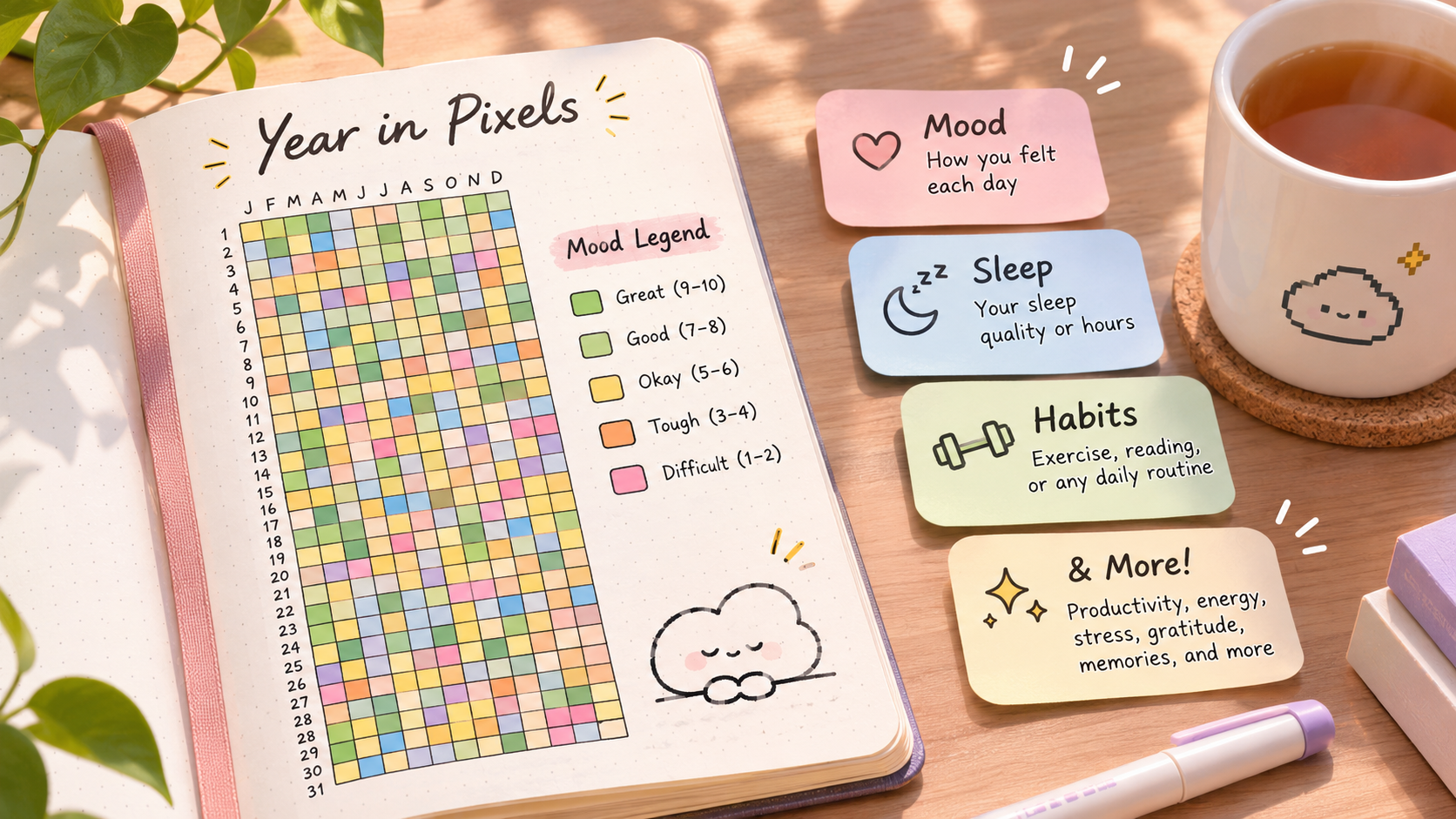
Think of it like a calendar filled with small pieces of information. One square doesn't tell you much, but an entire year can reveal periods of happiness, difficulty, change, and stability.
The individual days provide the details. The collection provides the perspective.
That's why even a short check-in on an otherwise uneventful day can be worthwhile.
Not because every day needs to become a cherished memory, but because everyday life is part of the bigger picture, too.
4. Sometimes, a Simple Check-In Is Enough
So how do you preserve that bigger picture without turning journaling into another daily responsibility?
The answer is to make recording your days as flexible as possible.
On memorable days, you might want to write about everything that happened, save photos, or reflect on your experiences in detail.
On ordinary days, you might simply ask yourself:
How was today?
Maybe it was a 7 out of 10. Nothing amazing, nothing terrible. Just a good, ordinary day.
That small check-in might take only a few seconds, but it still adds something to your personal history.
Over weeks and months, those small records can gradually form a picture of how you've been feeling and how your life has changed.
And if you miss a day? That's okay, too.
Consistency is useful, but it shouldn't come at the expense of enjoying the process.
You don't need a perfect, uninterrupted record for your journal to be meaningful. Even an incomplete collection of memories and check-ins can offer something valuable when you look back.
The goal isn't to document every moment. It's to preserve enough of your experiences to recognize the larger story.
Final Thoughts: Not Every Day Needs to Be Memorable
It's easy to feel like you need something interesting to happen before you have something worth writing down.
But your life isn't defined only by its most exciting moments.
The quiet days, familiar routines, and seemingly uneventful moments make up much of the time between those experiences.
You might never revisit most of those days individually. But together, they provide context for the memories you do revisit and help you understand what different periods of your life were really like.
So write when you have something to say. Keep it short when you don't. And don't feel guilty about skipping a day entirely.
Not every day needs to be memorable to be worth recording. Sometimes, its value comes from being part of something bigger.
This philosophy is part of why we created Yian, a daily journal and mood tracker built around the idea of recording life at your own pace.
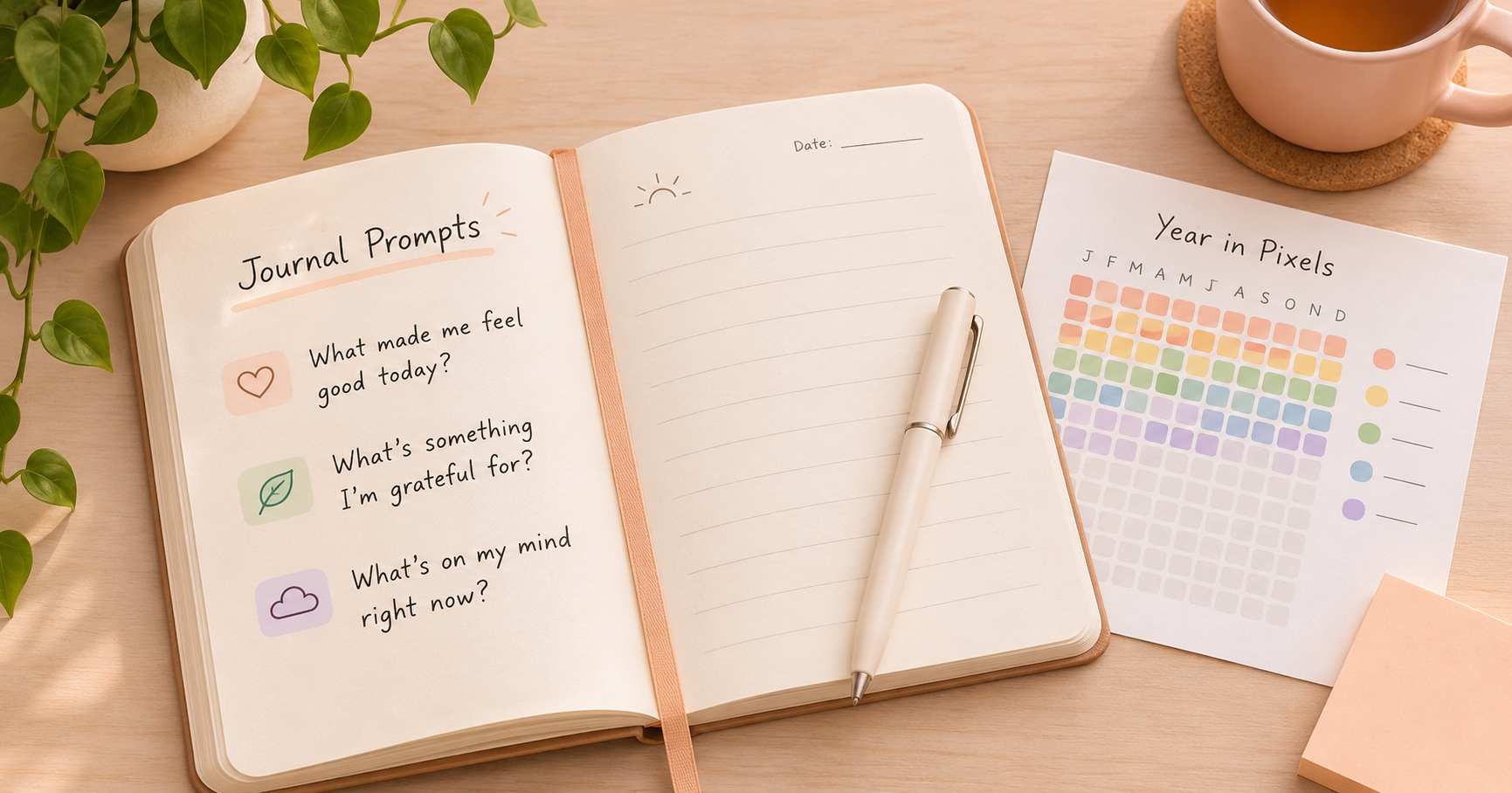
On memorable days, you can write detailed entries and save photos. On ordinary days, a simple mood rating is enough. Over time, those check-ins come together in a colorful Year in Pixels, allowing you to see the bigger picture of your life without the pressure of writing a full journal entry every day.
Comments
Join the discussionNo comments yet. Be the first to comment.